Five skills that shape your job search — and how they show up in your behavior
Adaptability, collaboration, communication, critical thinking, and empathy are not just hiring criteria: they determine how you identify opportunities, communicate value, and respond to setbacks.
Career Wizards · May 2025

The skills that shape careers also shape the search
A recent Korn Ferry post discussed five key skills that are shaping careers: adaptability, collaboration, communication, critical thinking, and empathy. It is worth taking a step back to look at how these skills show up in your job-search behavior — and how they can either accelerate or stall your progress.
These are not skills the employer evaluates only at the interview. They are already operating before that, in how you choose opportunities, present your experience, interpret feedback, and decide what to do next.
The skills that shape careers also shape the search: they determine how you identify opportunities, communicate value, and respond to setbacks.
The five skills and where they show up in the search
Adaptability
Recognizing a strategy isn't working, investigating why, and testing a different approach — without losing who you are.
Collaboration
Building relationships, exchanging information, asking for guidance, and considering perspectives that improve your decisions.
Communication
Explaining who you are professionally, what you do well, and how that helps a particular employer.
Critical thinking
Investigating before drawing conclusions: are you targeting the right roles? Where in the process are you losing opportunities?
Empathy
Considering the hiring decision from the employer's perspective: what does this team need to solve?

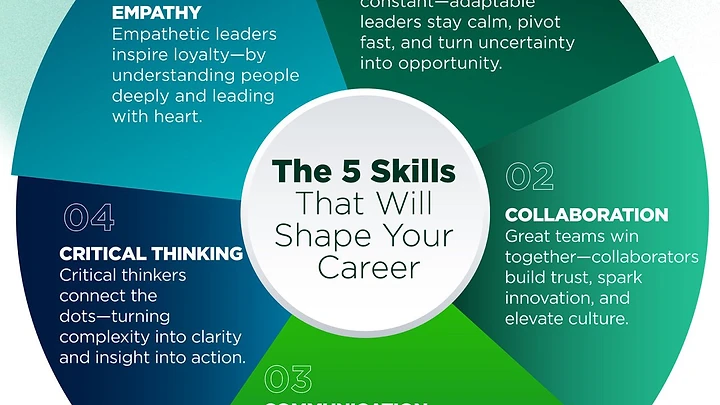
How each skill shows up — or fails to
- 1
1. Adaptability
Shows up when you recognize that a strategy isn't working, investigate why, and test a different approach. When you learn to present your experience to a new market without losing who you are. A lack shows up when you repeat the same actions for months or dismiss any guidance that pushes you beyond what feels familiar. But adaptability doesn't mean changing direction every time things get difficult. Restlessness can also urge you to constantly pursue something new and can lead you to abandon a strategy before giving it a chance to work. Applying for completely different roles without clear criteria can also signal a lack of direction instead of adaptability.
- 2
2. Collaboration
Shows up when you build relationships, exchange information, ask for guidance, and consider perspectives that can improve your decisions. A lack shows up when you insist on figuring everything out alone, even when you can't identify what needs to change. You avoid asking for help because you believe you should be able to handle everything yourself, or you only contact people when you need a referral.
- 3
3. Communication
Shows up when you can explain who you are professionally, what you do well, and how that helps a particular employer. When you choose relevant examples and answer the question you were actually asked. A lack shows up when your résumé lists responsibilities but leaves your value unclear. It shows up when you walk through your entire career history and expect the recruiter to connect the dots to the role.
- 4
4. Critical thinking
Shows up when you investigate before drawing conclusions: are you targeting the right roles? Where in the process are you losing opportunities? What evidence supports your positioning? It also shows up in how you use AI: you evaluate its suggestions, question its interpretations, and provide context to improve its responses. A lack shows up when one rejection becomes "nobody hires immigrants," every difficulty gets blamed on the ATS, or you copy AI-generated content without checking whether it accurately represents you.
- 5
5. Empathy
Shows up when you consider the hiring decision from the employer's perspective: what does this team need to solve? What questions might they have about my background? What examples could address those questions? A lack shows up when your entire application focuses on how much you need the opportunity without showing how you can contribute.
Real barriers, not guarantees
The job market has real barriers, and none of these skills guarantees an offer. But they influence how you identify opportunities, communicate your value, and respond to setbacks.
The point is not to turn the search into an exercise in self-criticism. It is to recognize that these skills are already operating — and that making them conscious is what allows them to work for you instead of against you.